
Time Matters
Why do we place such importance on watches in our lives?

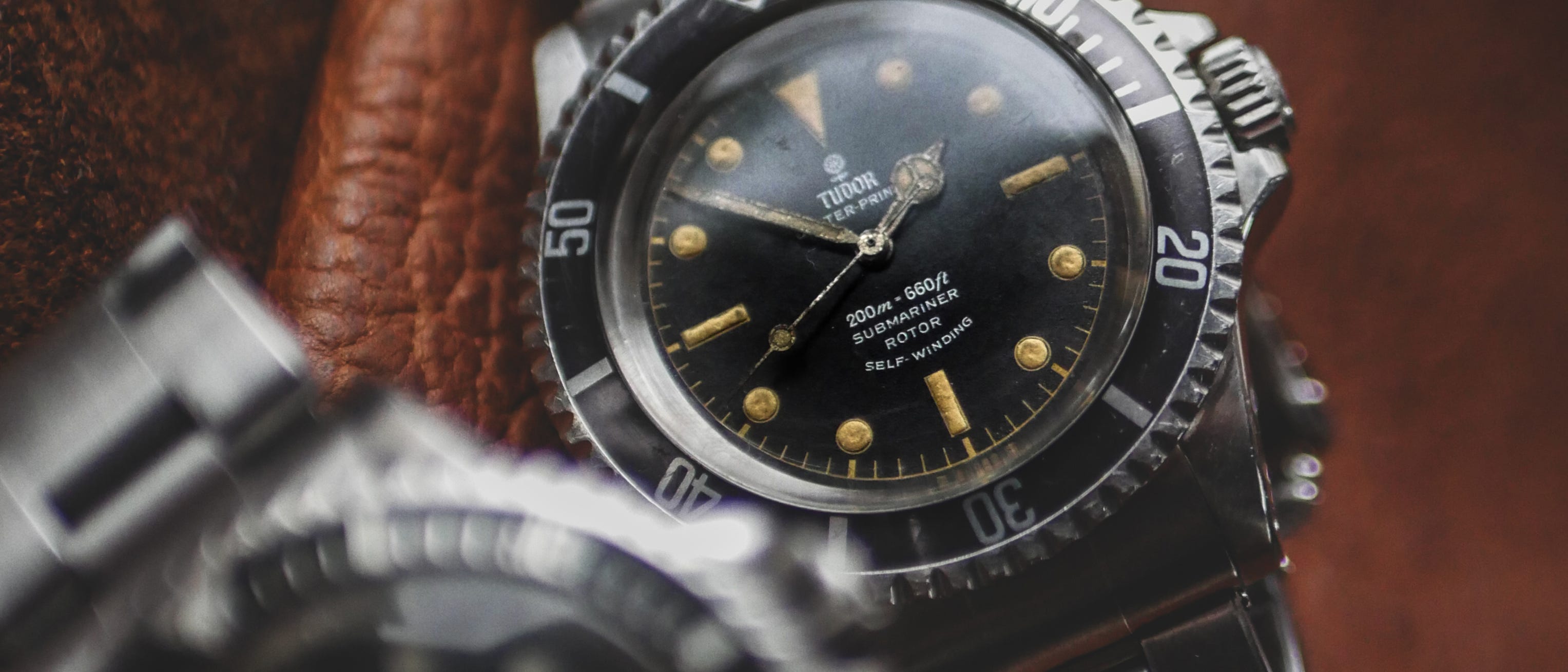
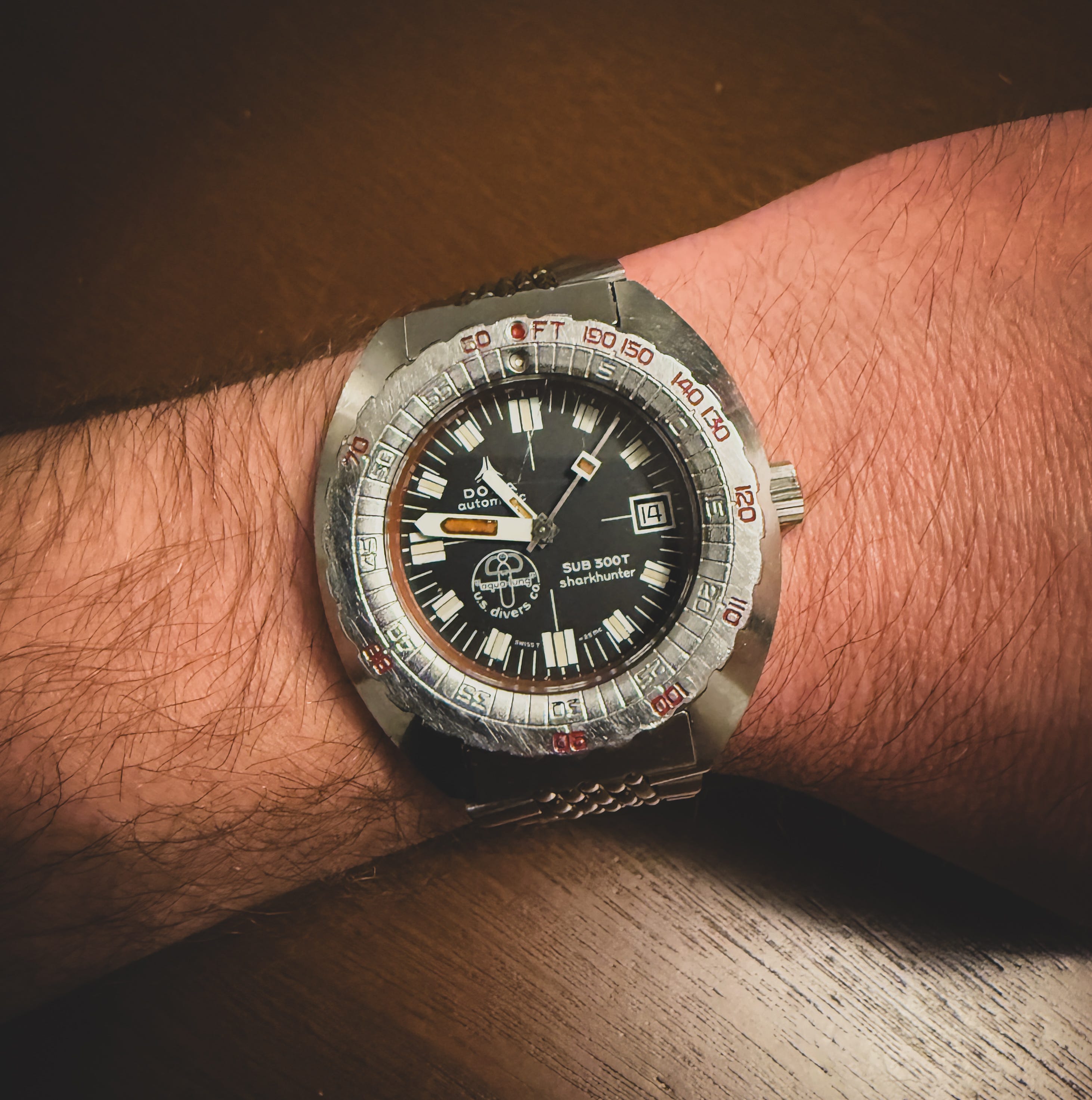
At first look, the watch in my hand had been ridden hard and put away wet. Its case showed battle scars with dents and dings across nearly every surface. The lume, aged considerably into a warm hue, displayed earnest darkening around the edges. To the casual observer, this may have looked like nothing more than a worn out piece of jewelry in need of replacement. Though for these qualities alone this Doxa Sub 300T Sharkhunter would surely be a collector’s darling—capturing all the best attributes that have solidified Doxa as a tool watch cult classic. But what makes this piece even more remarkable is the story of how it earned its scars.
A great story makes a watch infinitely more interesting. No doubt a piece that can tie its provenance to a famous wearer or event will instantly become more desirable—not to mention stone cold cooler. A great story about what amazing individuals accomplished while wearing whatever was on their wrist can also transform any watch independent of brand or value.
Still for those us with less interesting lifestyles or lacking as comparatively consequential moments in our resumes, I can’t help but think that we often overstate the importance of the heritage or story aspect baked into some watches, likely a side effect of seeking to justify so expensive a purchase through logic or even apologetic energy. I’ve long been intrigued by the seemingly strange divide of an individual with an analytical mind fascinated by the workings of a mechanical timepiece who’s also willing to purchase an irrationally expensive object that has long been rendered obsolete. Perhaps it’s an internal realization that builds a sort of insecurity in what others might consider an unreasonable decision. Or even an unwillingness to embrace the frivolity or folly of our need for joy.
I’m guilty of this as well, mostly as someone prone to waxing poetic and romanticizing objects with historical significance or designed to evoke a certain lifestyle through an overactive imagination. My occupation as a graphic designer feeds into this as well as I have a strong appreciation for both crafting stories and the design intent behind objects and the resulting form. Yet I believe there’s something important and practical in indulging the impractical. Despite our persistence in attempting to explain away our surroundings and very purpose, there are still many things in life that defy reason. Do we need to validate why a sunset is beautiful and worth taking the time to observe?
Building Character
In contrast to rapidly advancing tools and devices that are built largely with a disposable mentality reflecting the reality of the market, mechanical watches are intended to be, well, timeless. While they require regular maintenance and may not offer the same level of durability as their digital counterpoints, they will reliably do their duty free of battery changes, software updates, or misplaced charger cables. Because of this, they often end up being lifetime companions and capture the moments we experience. Scars or damage suddenly become stories and character if they occur during memorable events. They earn a status of trusted sources of information with the added benefit of an ever present souvenir.
Let’s go back to the Doxa I mentioned at the lead-in of this article—if you’ve made it this far. This particular example was owned by none other than a member of the RV Calypso, famously the vessel of French explorer and filmmaker Jacques Cousteau and now owned by my friend, Michael. It’s reasonable to assume that most every scar exhibited on the watch was accumulated by some moment impacting a part of the famous ship, below the waves on the same adventures you’ve seen on a screen, or the submersible used for much of the filming. What may have been just a compelling timepiece with earnest wear suddenly ascended into a time capsule rich in importance simply due to the context from which it earned its scars. The story behind it transforms each mark and blemish into something meaningful and significant. We enjoy finding these objects and serving as their steward, maybe even convincing ourselves that they possess some magical ability to imbue us with the same qualities that made the individual we admire so compelling.
The Mark of Moments
Aside from acquiring a watch that captures the stories of a previous wearer, we make a mark on the pieces we wear ourselves. Whether through our own adventures or others, it is the nature of this world that things will gain damage and wear over time. A watch has the ability to measure both the passing of time and remind us of how it has passed through time as well with observable traits. For example, my Rolex Submariner 5513 is far from a perfect specimen, its lugs unevenly polished and portions replaced through servicing. Someone somewhere in the world loved and wore this piece before I was even born, but it does at times strike me as odd to wear such a worn piece and not know the story of how it earned its scars. Still, I wear it regularly and appreciate it for what it is, adding my own story to its many flaws.
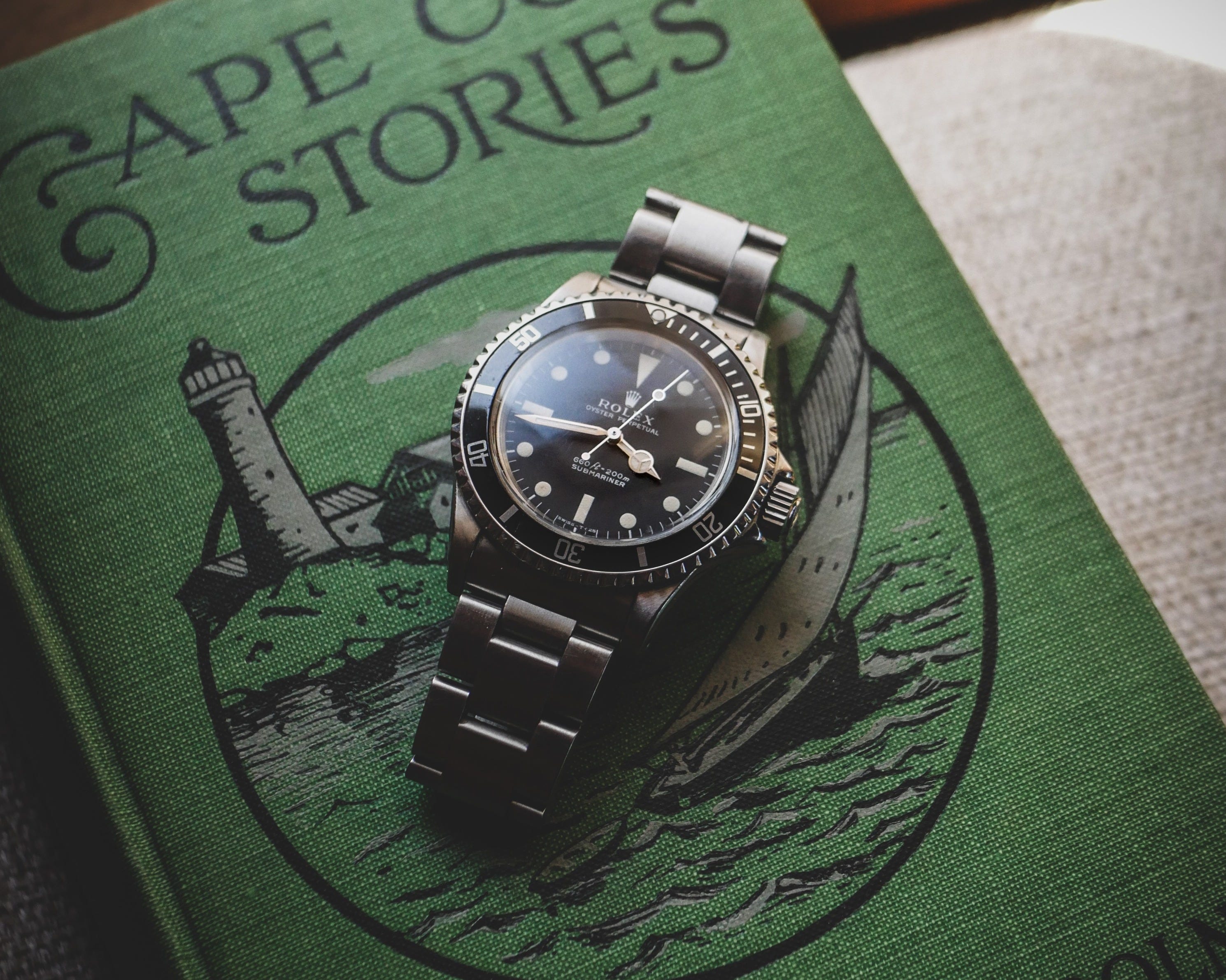
Memories can also cut both ways—much of life is not good or happy. While my 5513 has been on my wrist for many good moments, it still has the undesirable ability to transport me back to the NICU room a few years ago while our newborn daughter fought for her life for over a week. Here the watch transformed into a tangible object of nightmares, representing the passing of time as both a mark of progression and terror of the unknown. It was a battle that would ultimate prove impossible for her to overcome, and a visceral experience I can never fully dissociate with the watch as a sort of visual portal through time. It’s a memory I’ve struggled to keep compartmentalized with or without a totem, and one that I often fail to contain. In fact, it adds to the occasional compulsion I feel to send the watch on for something devoid of any meaning and release the funds to replace it with a blank canvas or an object to be viewed simply as something beautiful.
Beautiful Baubles
I am one likely to scoff at the act of taking a timepiece and throwing it in a safe never to adorn a wrist. As a watch is so distinctly purpose-built for wear, something feels off about the practice of never using it for at least that intended result. Still, given the price relative to functionality and accuracy (in fact lack there of) when compared to a substantially more affordable quartz piece, an individual who views fine mechanical timepieces as more art than strictly instrument may actually hold the more rational perspective. It cannot be the function alone that we prescribe such high value to.
While emotion and sentimentality enrich our lives or even leave us irrevocably scarred, we can lose sight of the reality of objects. At the end of the day, they have no real meaning aside from their intended purpose and that which we graft to them through our subjective experiences. Like my sunset observation before, things can be appreciated for their beauty aside from any reasoning or story. Do watches need to have a story or contextual reason to be truly appreciated? Or can we appreciate them purely for the object that they are?
Like most things, I think the answer is somewhere in between. It’s as disingenuous to manufacture undue importance into what are almost certainly luxuries as much as it is to simply be materialistic and obsessed with brand prestige or valuable objects. Looking through the lens of a designer, I tend to look at objects from a perspective of solving problems visually and appreciate those who managed to make functional objects so beautiful. Sometimes the design intent and execution itself is compelling enough.
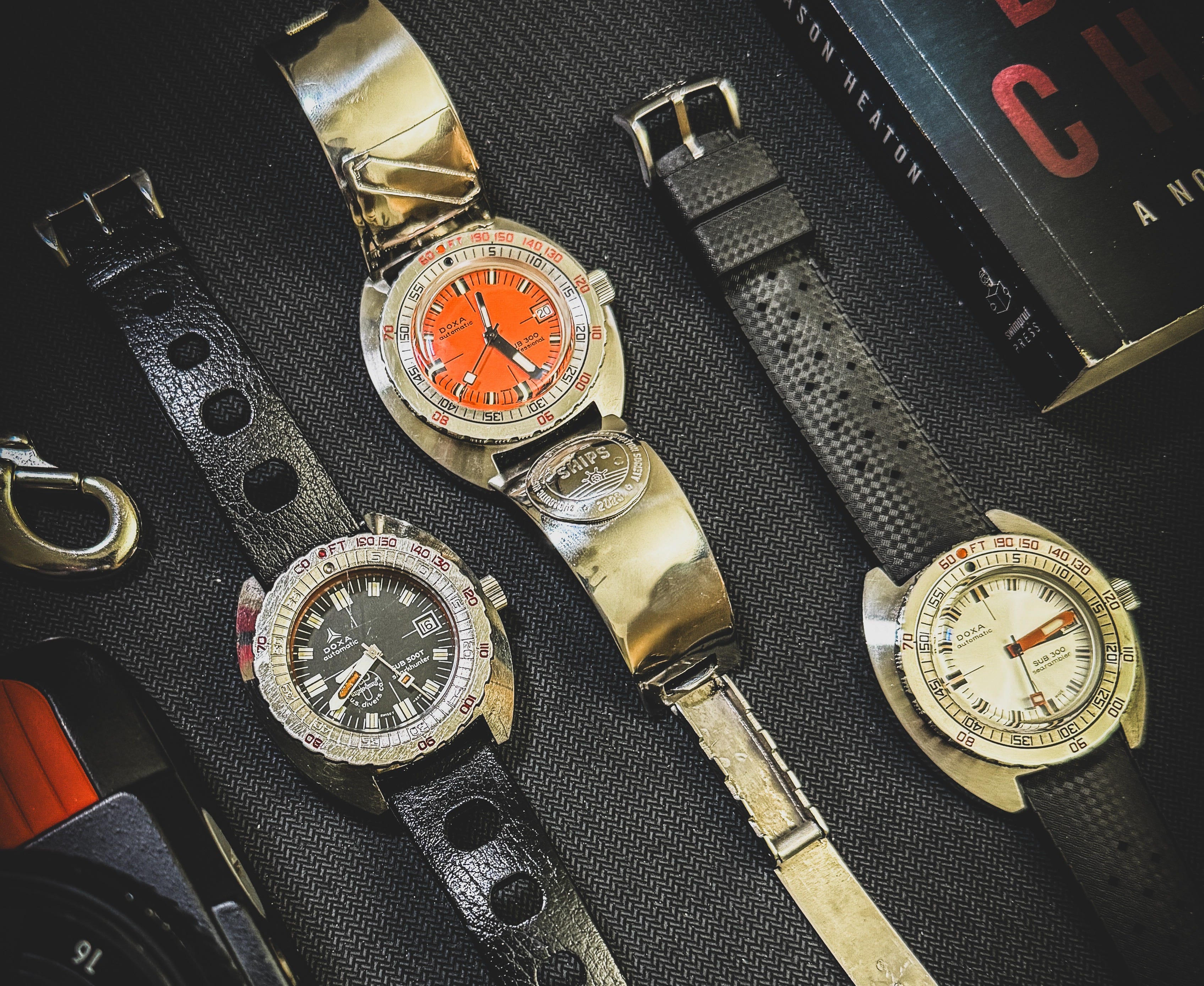
There may also be a freeing quality to removing yourself from any contextual baggage and heritage. After all, few of the men or women responsible for some of the most revered acts and feats celebrated by the watch world now likely paid heed to the heritage or story of the watch strapped to their wrists as they were earning their fame. At the end of the day, I think it’s as warranted to appreciate the nature of things as much as it is about some deeper story or meaning, no matter how much better a great story may make it. There’s room for both appreciating the accomplishments of others and ourselves in our lives, and even just appreciating objects for what they are.
Regardless of how you or I approach these fascinating little machines, perhaps we can simply appreciate a common truth—there are many ways a watch can tell time.
–M
I’m very sorry for your loss. Thanks for sharing
Beautifully written but I’m so sorry for what you and your family have had to go through.